
The crisp white shirt remains an essential cornerstone of the modern Indian wardrobe. Whether you are heading to a high-stakes boardroom meeting or attending a casual weekend brunch, this versatile garment offers a clean, polished aesthetic that never goes out of style.
However, selecting the right piece involves a fundamental choice. Many gentlemen often struggle when evaluating readymade vs made to measure shirts for their daily rotation. We understand that navigating the diverse retail landscape in India can feel overwhelming given the sheer variety of fabrics and fits available today.
Our goal is to provide you with the clarity needed to make an informed decision. We will examine the critical criteria for quality, personal style, and comfort to ensure your next purchase reflects your unique personality.
Key Takeaways
- The white shirt is a versatile staple for both professional and casual Indian settings.
- Understanding the difference between off-the-rack and custom options is vital for your wardrobe.
- Fit remains the most important factor when choosing between different garment construction methods.
- Quality of fabric significantly impacts the longevity and comfort of your clothing.
- Personal style preferences should guide your final decision during the shopping process.
Understanding the Landscape of Readymade vs Made to Measure Shirts
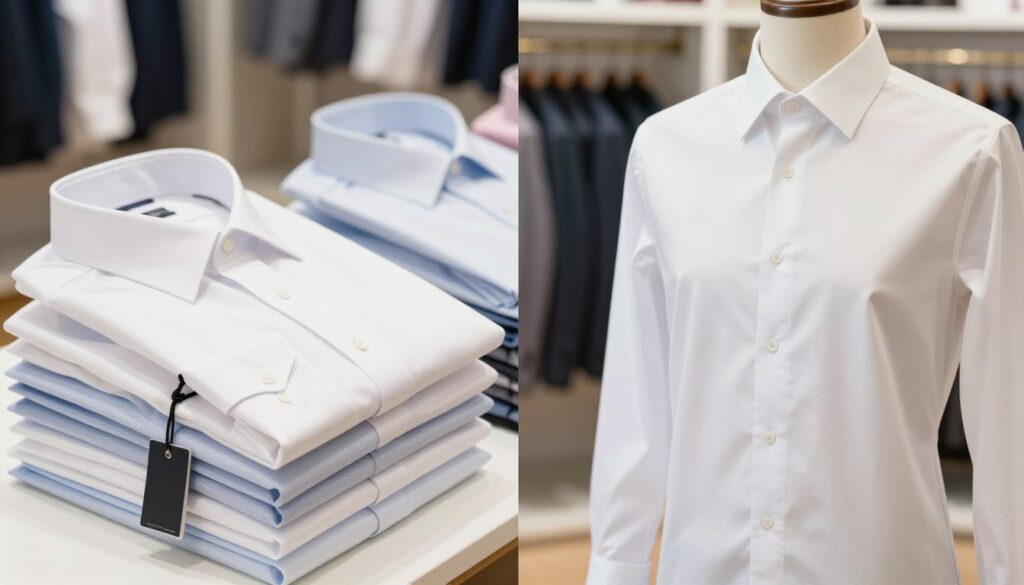
In the evolving landscape of Indian fashion, the white shirt has transformed from a basic utility into a symbol of personal style. Once viewed merely as a functional garment for office wear, it now serves as a canvas for individual expression. We see this shift reflected in how men across major cities prioritize fit and fabric quality over simple convenience.
The Evolution of the White Shirt in the Indian Market
The Indian market has witnessed a significant change in consumer behavior regarding formal wear. Where once the market was dominated by generic options, there is now a growing appreciation for precision and craftsmanship. This transition highlights a deeper desire for clothing that reflects one’s unique identity and professional stature.
“True elegance in menswear is not just about the brand label, but about how the fabric interacts with the wearer’s silhouette.”
Defining the Core Differences in Production
To make an informed choice, we must look at the technical divide between mass-market manufacturing and bespoke tailoring. When evaluating readymade vs made to measure shirts, the primary distinction lies in the construction process. Mass-market items are produced in bulk using standardized patterns, while custom pieces are drafted from scratch based on your specific measurements.
Choosing between standard size vs tailored shirts often comes down to your lifestyle requirements and body type. While ready-to-wear options offer immediate gratification, they rarely account for the subtle variations in shoulder width or sleeve length that define a perfect fit. We have compiled a comparison to help you visualize these differences clearly.
| Feature | Readymade Shirts | Made-to-Measure Shirts |
|---|---|---|
| Pattern Creation | Standardized templates | Individual body mapping |
| Fit Customization | Limited to basic sizes | High precision tailoring |
| Fabric Choice | Pre-selected by brand | Extensive personal selection |
| Production Time | Immediate availability | Requires lead time |
Understanding these production methods is the first step toward building a wardrobe that stands the test of time. By recognizing the value of a tailored approach, you ensure that your investment provides both comfort and confidence. Whether you prioritize speed or a flawless silhouette, knowing the mechanics behind your clothing is essential for any modern professional.
The Case for Ready-to-Wear Shirts
We often find that the convenience of ready-to-wear clothing remains a primary driver for busy professionals. When you need a crisp white shirt for an upcoming meeting, the ability to walk into a store and leave with a finished product is unmatched. This instant gratification is a cornerstone of the modern retail experience in India.
Immediate Availability and Convenience
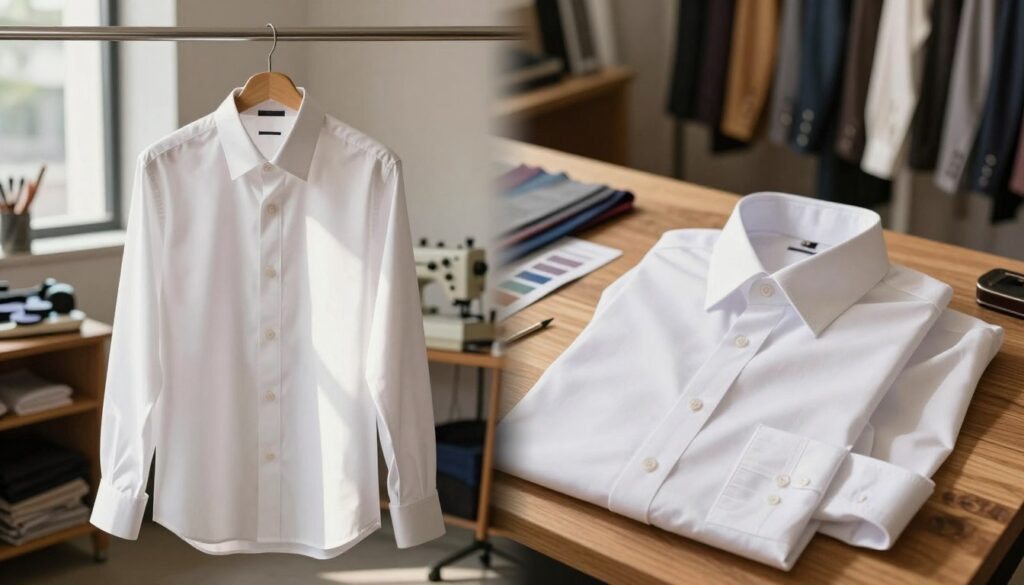
The primary appeal of ready-to-wear garments lies in their immediate accessibility. Unlike bespoke options that require multiple fittings and weeks of waiting, these shirts are ready for wear the moment you purchase them. For many, this efficiency is essential in a fast-paced lifestyle where time is a luxury.
Standardized Sizing and Global Brands
Global retail brands have mastered the art of creating garments that fit a wide range of body types. By utilizing standardized sizing, these companies ensure that a customer can reliably find their size across different collections. Comparing standard size vs tailored shirts often highlights that mass-market brands provide a consistent, predictable shopping experience.
The Role of Mass Production in Cost Efficiency
Mass production techniques allow brands to offer high-fashion aesthetics at a fraction of the cost of custom tailoring. By producing thousands of units, companies achieve significant economies of scale. This makes professional attire accessible to a much broader demographic across India, ensuring that style does not always require a premium investment.
Common Fit Challenges with Off-the-Rack Options
Despite the benefits, we must acknowledge the limitations inherent in mass-produced clothing. Many shoppers encounter issues such as sleeve length discrepancies or torso width that does not align perfectly with their frame. When evaluating off-the-rack vs custom shirts, these fit challenges are the most frequent points of frustration for the discerning wearer.
| Feature | Ready-to-Wear | Custom Tailored |
|---|---|---|
| Availability | Immediate | Delayed |
| Pricing | Budget-Friendly | Premium |
| Fit Precision | Standardized | Personalized |
| Comparison | Standard size vs tailored shirts | High customization |
The Art of Made-to-Measure Tailoring
We believe that the true essence of style lies in the details that only custom tailoring can provide. While many men settle for standard options, the bespoke experience offers a level of precision that transforms a simple white shirt into a signature piece of your wardrobe.
Personalization and the Perfect Fit
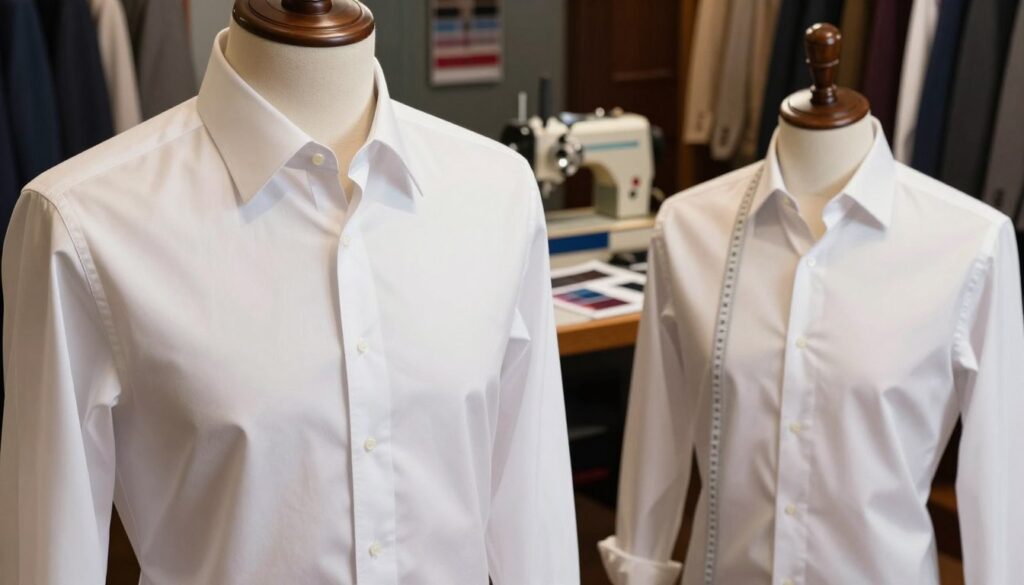
When we compare off-the-rack vs custom shirts, the primary difference is the relationship between the fabric and your body. Mass-produced items often rely on generic patterns that fail to account for individual posture or shoulder slope.
In contrast, one-size-fits-all vs custom tailored shirts highlights a shift from convenience to confidence. A custom shirt is engineered to follow your specific measurements, ensuring that the collar sits perfectly and the sleeves end exactly where they should.
Fabric Selection and Customization Details
Beyond the fit, the selection of materials allows you to dictate the performance and feel of your garment. We often guide clients toward high-thread-count cottons that offer breathability in the humid Indian climate.
Customization extends to the smallest elements, such as the choice of buttons, collar stiffness, and cuff styles. These subtle decisions ensure that your shirt is not just a garment, but a reflection of your personal aesthetic.
Why Customization Matters for Professional Attire
In a professional setting, your appearance serves as a silent introduction. A shirt that fits flawlessly projects competence and attention to detail, which is why many executives prefer the precision of bespoke tailoring.
| Feature | Ready-Made | Made-to-Measure |
|---|---|---|
| Fit Accuracy | Standardized | Precise |
| Fabric Choice | Limited | Extensive |
| Personalization | Minimal | High |
The Process of Getting Measured in India
The journey to a perfect shirt in major Indian cities is a collaborative process between you and the tailor. It typically begins with a consultation where your body measurements are recorded with professional accuracy.
After the initial measurements, you select your preferred fabrics and design elements. The tailor then creates a unique pattern, ensuring that every subsequent shirt you order maintains that perfect fit you have come to expect.
Comparing Cost Structures and Long-Term Value
We often overlook the long-term financial implications of choosing between mass-produced vs bespoke shirts. While the initial price tag of a store-bought item may seem attractive, the true value of a garment reveals itself over time. Making an informed decision requires us to look past the surface level of retail pricing.
Initial Investment vs Cost Per Wear
When we calculate the cost per wear, we divide the total price of the shirt by the number of times we expect to wear it. A high-quality custom shirt might carry a higher upfront cost, but its superior construction ensures it lasts for years. In contrast, cheaper alternatives often lose their shape or fabric integrity after only a few months of regular use.
By choosing quality over quantity, we reduce the frequency of replacement. This approach effectively lowers the cost per wear, making the investment in premium tailoring more economical in the long run. We find that the durability of bespoke fabrics provides significantly better value than mass-market options.
Hidden Costs in Alterations for Ready-Made Shirts
Many shoppers do not account for the extra expenses associated with one-size-fits-all vs custom tailored shirts. When we purchase a standard shirt, it rarely fits perfectly off the rack. We often find ourselves visiting a local tailor to adjust the sleeves, waist, or collar, which adds a hidden surcharge to the original price.
These recurring alteration costs can quickly bridge the gap between the price of a standard shirt and a custom-made one. Furthermore, even with professional adjustments, a mass-produced garment may never achieve the precise silhouette of a bespoke piece. Investing in a custom fit from the start eliminates these secondary expenses entirely.
| Cost Factor | Ready-Made Shirt | Bespoke Shirt |
|---|---|---|
| Initial Price | Low | High |
| Alteration Fees | Frequent/High | None |
| Lifespan | Short | Long |
| Cost Per Wear | Higher | Lower |
Fabric Quality and Durability Considerations
The foundation of a truly exceptional white shirt lies in the quality of the fabric chosen for its construction. When we compare mass-produced vs bespoke shirts, the primary differentiator is often the raw material used by the manufacturer. High-quality textiles not only feel better against the skin but also maintain their structural integrity through repeated wash cycles.
Sourcing Premium Textiles for Custom Shirts
Bespoke tailors typically source their fabrics from renowned mills that prioritize long-staple cotton fibers. These fibers are significantly stronger and smoother than the short-staple cotton often found in cheaper alternatives. By selecting premium textiles, we ensure that our garments resist pilling and maintain a crisp, professional appearance for years.
Evaluating Mass-Market Fabric Standards
In contrast, store-bought vs made-to-order shirts often differ due to the cost-cutting measures employed by mass-market retailers. Many off-the-rack options utilize chemically treated fabrics to hide imperfections or to provide a temporary sheen that fades after a few washes. We find that these materials are prone to thinning at the elbows and collar points much faster than custom-sourced fabrics.
How Thread Count Impacts Longevity
Thread count serves as a vital indicator of a fabric’s density and durability. A higher thread count generally suggests a tighter weave, which provides greater resistance to daily wear and tear. However, we must be wary of marketing gimmicks, as an excessively high thread count can sometimes result in a fabric that is too delicate for everyday use.
| Feature | Mass-Market Shirt | Bespoke Shirt |
|---|---|---|
| Fiber Quality | Short-staple cotton | Long-staple Egyptian/Pima |
| Weave Density | Low to medium | High and consistent |
| Durability | Prone to fraying | Resistant to wear |
| Finish | Chemical treatments | Natural luster |
Ultimately, choosing between store-bought vs made-to-order shirts comes down to how much value we place on longevity. While the initial cost of premium fabric is higher, the extended lifespan of the garment makes it a smarter investment for a professional wardrobe. Understanding these technical nuances allows us to make informed decisions that benefit our style and our budget.
Style Versatility and Design Freedom
Designing a shirt from scratch offers a level of creative freedom that standard retail simply cannot match. When we compare pre-made vs personalized shirts, the primary distinction lies in the agency you have over the final product. You are no longer limited by the seasonal trends dictated by mass-market brands.
Collar Styles and Cuff Variations
The architecture of a shirt begins with the collar, which frames your face and sets the tone for your entire outfit. Custom tailoring allows you to select from a wide array of options, such as the classic spread, the sharp point, or the relaxed button-down. Choosing the right collar ensures that your shirt complements your specific facial structure and the occasion at hand.
Cuff variations provide another layer of customization that enhances your personal aesthetic. Whether you prefer the functional simplicity of a barrel cuff or the sophisticated elegance of French cuffs, the choice remains entirely yours. These small adjustments transform a basic garment into a reflection of your professional identity.
Monogramming and Personal Touches
Beyond the structural elements, the subtle art of monogramming adds a distinct signature to your wardrobe. This detail serves as a quiet nod to the craftsmanship involved in store-bought vs made-to-order shirts. By placing your initials in a discreet location, you elevate the garment far beyond standard retail offerings.
We believe that these personal touches are what truly define a high-quality shirt. From selecting unique mother-of-pearl buttons to choosing contrasting thread colors for the buttonholes, every decision contributes to a piece that is uniquely yours. Embracing these design freedoms allows you to curate a collection that stands out in any professional setting.
The Convenience Factor in the Digital Age
Modern convenience has redefined the classic debate between mass-produced and custom-made garments. In India, the rise of digital platforms has made it easier than ever to access high-quality apparel from the comfort of our homes. We no longer need to spend hours visiting multiple tailors to achieve a perfect fit.
Online Ordering for Custom Tailoring
The emergence of specialized websites has streamlined the process of acquiring bespoke clothing. We can now select premium fabrics, choose collar styles, and input our measurements through intuitive digital interfaces. This shift has effectively blurred the lines regarding pre-made vs personalized shirts, as custom options are now just a few clicks away.
Many platforms even offer video consultations to ensure that every detail meets our specific requirements. By leveraging these tools, we enjoy the precision of professional tailoring without the logistical burden of frequent physical visits. This accessibility is a game-changer for busy professionals across major Indian cities.
The In-Store Experience vs E-commerce
While digital platforms offer unmatched speed, the traditional in-store experience remains valuable for those who prioritize tactile interaction. Touching the fabric and seeing the drape in person provides a level of confidence that screens cannot fully replicate. However, the efficiency of e-commerce is difficult to ignore when comparing ready-to-wear vs crafted shirts.
“Technology does not replace the artisan; it amplifies the reach of their craft, allowing quality to meet convenience in a way that serves the modern individual.”
We must weigh the sensory benefits of a physical shop against the time-saving nature of online ordering. The following table highlights the key differences between these two approaches to help you decide which path suits your lifestyle best.
| Feature | In-Store Tailoring | Online Customization |
|---|---|---|
| Convenience | Requires physical travel | Accessible from home |
| Fabric Feel | High tactile feedback | Digital swatches/samples |
| Turnaround | Often slower | Optimized for speed |
| Personalization | Direct expert guidance | Guided digital menus |
Ultimately, the choice between pre-made vs personalized shirts depends on your personal priorities. Whether you value the hands-on guidance of a master tailor or the rapid efficiency of ready-to-wear vs crafted shirts ordered online, the current market offers excellent solutions for every preference.
Navigating the Indian Tailoring Ecosystem
The Indian market presents a fascinating crossroads where traditional craftsmanship meets contemporary fashion demands. For those seeking to elevate their wardrobe, understanding the local landscape is essential. We find that the secret to a superior shirt lies in knowing where to look and how to communicate your vision to a skilled artisan.
Finding Reliable Bespoke Services in Major Cities
Major urban hubs like Mumbai, Delhi, and Bangalore host a vibrant array of tailoring houses. When evaluating these services, we recommend looking for shops that prioritize fabric quality and precise measurements. It is often helpful to visit a studio in person to inspect their previous work and discuss your specific needs.
Distinguishing between generic vs custom-fit shirts is the first step toward a better fit. A reliable tailor will take the time to understand your body shape, posture, and lifestyle requirements. Do not hesitate to ask for references or to start with a single trial shirt to test their attention to detail.
“True elegance is not about being noticed, it is about being remembered.”
Balancing Local Craftsmanship with Modern Trends
The modern gentleman often struggles with the choice between ready-to-wear vs crafted shirts. While mass-market brands offer instant gratification, local bespoke services provide a level of personalization that is hard to replicate. We encourage you to view your relationship with a tailor as a long-term partnership rather than a one-time transaction.
To successfully balance tradition with modern trends, consider these tips:
- Communicate clearly: Bring reference photos of collar styles or cuff details you admire.
- Prioritize fit: Ensure the tailor understands your preference for a slim, regular, or relaxed silhouette.
- Stay consistent: Once you find a tailor who understands your measurements, stick with them to ensure consistent results.
By embracing the expertise of local craftsmen, you gain access to garments that reflect your personality. This approach ensures that your wardrobe remains both stylish and functional for years to come.
Conclusion
Selecting the right white shirt transforms your daily appearance and boosts your professional confidence. We have explored the nuances of generic vs custom-fit shirts to help you navigate your sartorial journey. Your choice rests on balancing your specific budget, time constraints, and fit requirements.
Brands like Raymond or bespoke tailors in Mumbai offer distinct paths for your wardrobe needs. Choosing between generic vs custom-fit shirts allows you to prioritize either immediate convenience or long-term personal expression. We believe that a well-fitted garment serves as the foundation of a sharp, modern look.
We encourage you to invest in quality pieces that provide lasting satisfaction. Whether you opt for the ease of off-the-rack options or the precision of tailored garments, your style should reflect your unique standards. Start building a collection that empowers you in every setting today.
FAQ
What is the primary difference between readymade vs made to measure shirts?
While both serve the modern professional, the core difference lies in the production process. Readymade shirts from brands like Louis Philippe or Arrow are built to a standardized pattern based on average measurements. In contrast, made-to-measure shirts are adapted from an existing base pattern but adjusted to fit your specific body dimensions, providing a much higher degree of accuracy in the fit.
When should we opt for off-the-rack vs custom shirts?
We recommend choosing off-the-rack options when you need immediate availability for an upcoming event or want a cost-effective solution from global retailers like Zara. However, if you have a unique body type—such as broad shoulders with a narrow waist—transitioning to custom shirts is the better choice to avoid the “billowing” effect often found in mass-market garments.
Are mass-produced vs bespoke shirts comparable in terms of fabric quality?
Generally, we find that bespoke and made-to-measure services offer access to higher-tier textiles from world-class mills like Thomas Mason or Söktaş. While mass-produced shirts use durable fabrics, they are often blended with synthetic fibers for cost efficiency. In contrast, made-to-order shirts allow us to select 100% premium Egyptian or Giza cotton, which offers superior breathability and longevity.
What are the common fit challenges we face with standard size vs tailored shirts?
Many of us struggle with standard size shirts where the neck fits but the sleeves are too long, or the chest is perfect but the torso is too wide. Tailored shirts eliminate these discrepancies by taking into account your specific posture and arm length, ensuring a silhouette that one-size-fits-all patterns simply cannot achieve.
How does the initial investment of store-bought vs made-to-order shirts affect long-term value?
While store-bought shirts have a lower upfront price, we must consider the “cost per wear.” Because made-to-order shirts are crafted with reinforced stitching and superior materials, they tend to withstand frequent laundering much better. Over time, the durability of a crafted shirt often makes it a more economical investment than repeatedly replacing lower-quality generic options.
Can we enjoy the benefits of ready-to-wear vs crafted shirts through online platforms?
Absolutely. The digital evolution in India has allowed brands like Bombay Shirt Company to bridge the gap. We can now enjoy the convenience of online shopping while still receiving the precision of crafted shirts. Many of these platforms allow us to save our measurements digitally, making it easier to order personalized shirts without needing a physical fitting every time.
Why is customization important for professional attire when comparing generic vs custom-fit shirts?
In a professional environment, details signify attention to quality. Custom-fit shirts allow us to choose specific collar styles—such as a formal spread or a modern cutaway—and add personal touches like monogramming. These features are rarely available in generic shirts and help us project a more polished and authoritative image in the workplace.
What should we look for in the Indian market when choosing pre-made vs personalized shirts?
We suggest looking for a balance between heritage craftsmanship and modern trends. While pre-made shirts from major labels offer speed, engaging with reliable bespoke services in hubs like Mumbai, Delhi, or Bangalore ensures your personalized shirts feature hand-aligned patterns and premium hardware, such as mother-of-pearl buttons, which are hallmarks of true quality.
 Welcome Back 👋